

Table of Content
Hybrid crypto exchange platform development refers to building a cryptocurrency trading platform that combines the strengths of both centralized (CEX) and decentralized (DEX) exchanges.
It aims to deliver the fast order execution, liquidity, and user-friendly experience of CEXs while offering the security, transparency, and self-custody benefits of DEXs.
Step-by-Step Guide to Develop a Hybrid Crypto Exchange
Hybrid crypto exchange development involves several key steps to ensure a secure, efficient, and user-friendly platform.
Here is a simple breakdown of the steps involved,
Step 1: Proper Planning
This initial phase includes conducting market research to identify trends and gaps in the cryptocurrency space.
Understanding the target audience and their needs is the key, as it is crucial for defining the platform's features and functionalities.
Step 2: Interface Designing
The design phase focuses on creating an intuitive user interface that enhances user experience.
A visually appealing and responsive design is essential to attract users and facilitate easy navigation within the platform.
Step 3: Backend Development
This step involves establishing a robust backend infrastructure, including server integration, API connections, and database management.
It ensures seamless communication between the front end and the blockchain network for efficient transaction processing.
Step 4: Programming
At this stage, developers create core functionalities such as the trading engine, payment gateways, and security protocols.
This is where the integration of centralized and decentralized components takes place to optimize performance.
Step 5: Testing
Rigorous testing is conducted to identify and rectify any bugs or vulnerabilities in the platform.
This phase ensures that the exchange operates reliably and securely before hitting the end users.
Step 6: Deployment
Once testing is complete, the platform is deployed in a live environment.
This step includes final checks to ensure all systems are functioning correctly and that users can access the exchange seamlessly.
Step 7: Maintenance And Support
Post-launch, continuous maintenance is necessary to address any issues that arise and to implement updates or enhancements.
Ongoing support helps maintain user satisfaction and platform security.
Looking to blend centralized & decentralized trading in one crypto exchange?
Fourchain is here to create a seamless hybrid crypto exchange with advanced security, seamless user experiences, deep liquidity, and enterprise-grade scalability



Key Features to Include in Developing a Hybrid Crypto Exchange
Hybrid crypto exchanges come with the strengths of both centralized and decentralized trading platforms, so utmost importance must be given to key features to include in its development.
Take a look at the list of key features,
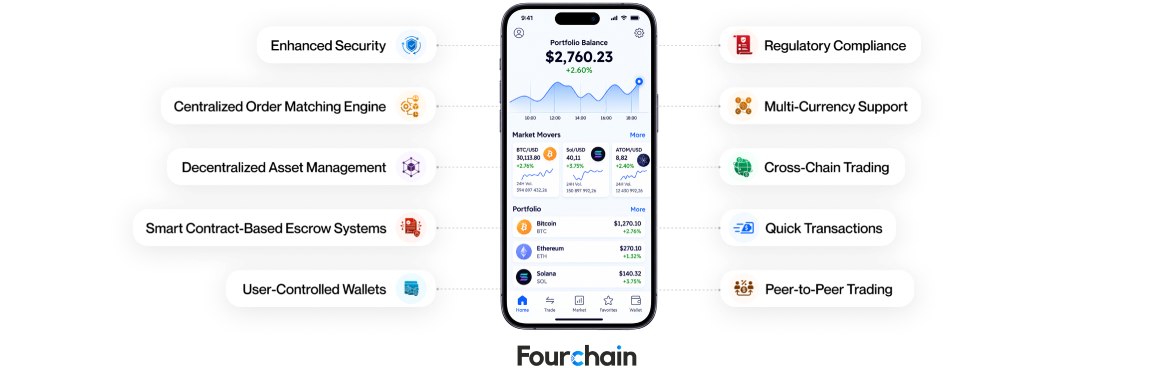
Enhanced Security
Users maintain control over their private keys and funds until the trade is finalized, reducing the risk of hacks and theft associated with centralized wallets.
Centralized Order Matching Engine
This feature ensures efficient processing of buy and sell orders, enabling quick trade execution and improved liquidity by centralizing order management.
Decentralized Asset Management
Utilizing blockchain-based wallets allows users to securely store their cryptocurrencies while retaining control over their assets, minimizing risks related to centralized storage.
Smart Contract-Based Escrow Systems
Smart contracts facilitate secure transactions by holding funds until predefined conditions are met, ensuring trust between trading parties without intermediaries.
User-Controlled Wallets
Unlike traditional exchanges, hybrid platforms empower users with full authority over their wallets, enhancing privacy and security during transactions.
Regulatory Compliance
Implementing Know Your Customer (KYC) and Anti-Money Laundering (AML) procedures helps ensure adherence to legal regulations while maintaining user privacy.
Multi-Currency Support
The ability to trade various cryptocurrencies alongside fiat currencies increases accessibility for users and broadens the trading options available on the platform.
Cross-Chain Trading
Some hybrid exchanges support trading across different blockchains, allowing users to access a wider variety of assets and trading pairs.
Quick Transactions
The integration of advanced payment gateways facilitates fast deposits and withdrawals, allowing users to capitalize on market opportunities swiftly.
Peer-to-Peer Trading
This feature enables users to engage in direct transactions with one another, fostering a dynamic trading environment that encourages price negotiation outside traditional order book constraints.
Benefits of investing in Hybrid Trading Platform
Entrepreneurs who are considering developing a hybrid crypto exchange can enjoy several key business benefits,
Take a look at it,
Improved Liquidity
By combining centralized order books with decentralized liquidity pools, hybrid exchanges can offer superior liquidity compared to both CEXs and DEXs. This results in better trading prices and a more attractive environment for traders, ultimately driving higher trading volumes.
Faster Transaction Speeds
The centralized order-matching engine facilitates quick transaction processing, enabling users to execute trades rapidly. This efficiency is crucial in the fast-paced crypto market, where timely execution can impact profitability.
Regulatory Compliance
Hybrid platforms can easily implement necessary KYC and AML procedures while still respecting user privacy. This compliance helps build credibility with regulators and attracts institutional investors who prioritize adherence to legal standards.
Scalability
The hybrid model allows exchanges to handle high transaction volumes efficiently by leveraging both centralized and decentralized components. This scalability is essential for accommodating growth as user demand increases.
Enhanced User Experience
A user-friendly interface combined with responsive customer support improves overall user satisfaction. By catering to both novice and experienced traders, hybrid exchange owners can retain users more effectively.
Cost Efficiency
The integration of decentralized elements can lead to reduced operational costs over time by minimizing the need for extensive infrastructure typically required by centralized exchanges. This efficiency can improve profit margins for exchange operators.
Market Differentiation
Offering a hybrid model allows exchanges to stand out in a competitive market by providing unique features that address common pain points in both centralized and decentralized trading environments. This differentiation can attract a loyal user base seeking innovative solutions.
Why Choose Fourchain For Developing a Hybrid Crypto Exchange Platform?
Fourchain, a trusted cryptocurrency exchange development company for developing your hybrid crypto trading platform is a smart decision due to our expertise in combining the best features of centralized and decentralized platforms.
We prioritize enhanced security, ensuring users have full control over their private keys and assets, which significantly reduces risks associated with hacks.
Our team is dedicated to delivering a user-friendly experience with fast transaction speeds and robust regulatory compliance, making it easier for you to attract and retain traders.
With our advanced technology and commitment to innovation, Fourchain is well-equipped to help you develop a successful hybrid crypto exchange that meets the evolving needs of the cryptocurrency market.

