

Table of Content
For any cryptocurrency exchange security is a core requirement that involves implementing multi-layer security protocols, advanced encryption, and regulatory compliance from the very beginning.
With these risks in mind, it is crucial for users to select exchanges that prioritize security. Whether you are an experienced trader or a new cryptocurrency user, you need to know and ensure the existence of such robust security features on an exchange.
In this extended guide, we will look into the 7 must-have security features every cryptocurrency exchange should have, supported by real-time use cases, examples, and additional precautions you can take to further secure your assets.
Must Have Cryptocurrency Exchange Security Features
When developing a trading platform, implementing the must-have security features in a cryptocurrency exchange is crucial to ensuring the safety of users' digital assets. These features form the foundation of a secure platform, protecting against hacking, fraud, and other security risks.
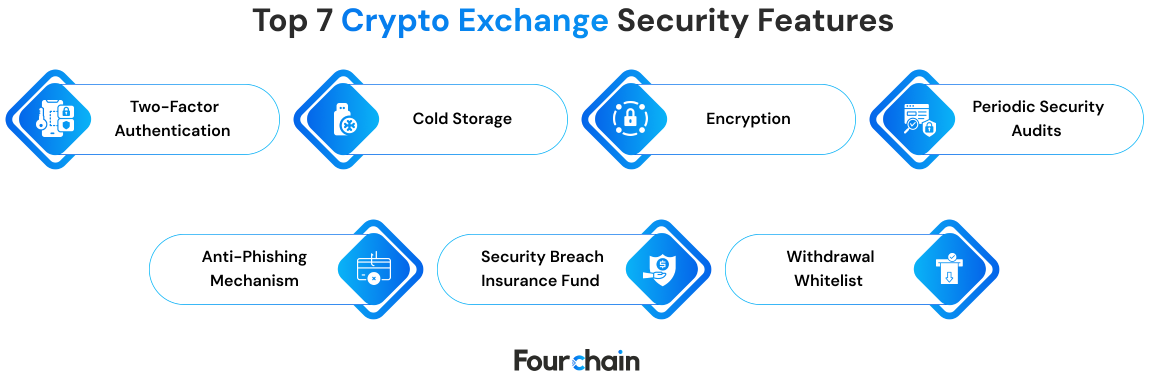
1. Two-Factor Authentication (2FA): The First Line of Defense
Two-Factor Authentication (2FA) is a security feature that requires two forms of verification before allowing users to access their accounts. The first factor is usually something you know-your password, and the second factor is something you have, such as a one-time code sent to your mobile device or generated by an authenticator app like Google Authenticator.
Example:
In 2020, the binance exchange saw a massive hack in which $40 million in bitcoin were stolen. A major reason why several users were spared was due to the implementation of strong 2FA, thus making it quite challenging for hackers to gain entry into accounts lacking the second form of authentication.
Why It Matters:
Hackers primarily target passwords; however, without 2FA, the attacker would also need access to the second layer of protection, such as your mobile device. This would make unauthorized access much more difficult, especially with strong, unique passwords.
Best Practices:
Use apps like Google Authenticator or Authy instead of SMS-based 2FA. SMS is prone to SIM-swapping attacks. Update your password and 2FA settings often to close potential security gaps.
2. Cold Storage: Keeping Funds Offline and Secure
Cold storage is the holding of most of the cryptocurrency funds off-line in disconnected storage systems which are not at all connected with the internet. The advantage in cold storage lies in the total insulation from potential online threats such as hacking or phishing attacks.
Example:
Coinbase is one of the world's most popular exchanges and stores about 98% of customer funds in cold storage.. The method was a lifeline for the platform during a security incident involving hot wallets in 2019. It's cold storage system protected the majority of users' assets from the danger of the breach.
Why It Matters:
Hot wallets (online wallets) are necessary for operational flexibility, but they make funds vulnerable to online threats. Cold storage is the extra layer of protection as funds are kept in an offline environment, reducing the risk of loss due to hacking.
Best Practices:
- Use the mix of cold and hot wallets but maintain emphasis on the major majority of coins and tokens remaining cold.
- Use of cold wallets should be individual where large funds will be transferred in, especially by each user as individual protection measures.
3. Encryption: Secure Your Valuables
It ensures that sensitive information is not accessed without authorization. Without proper encryption, data transmitted via the internet may be intercepted and stolen. Industry-standard SSL encryption is used in the best exchanges to protect personal and financial information.
Example:
The Mt. Gox exchange experienced one of the biggest hacks in the history of cryptocurrencies in 2017. Later, it was found that they lacked encryption and followed terrible security practices that made the exchange more prone to data breaches. They lost 850,000 bitcoins worth approximately $450 million. This breach, in particular, was significant for its message to emphasize the significance of encryption and its role in the prevention of theft of data.
Why It Matters:
Encryption ensures that any information you share with the exchange—be it personal details or transaction information is protected from hackers. If an exchange doesn't encrypt its data, users risk having their private data compromised, leading to identity theft or fund theft.
Best Practices:
- Always look for "HTTPS" in the URL of the exchange's website, which indicates it is using SSL encryption.
- Avoid sharing sensitive information over unsecured channels, such as public Wi-Fi networks.
Want to Build a Secure Crypto Exchange
Fourchain helps you build a crypto exchange with multi-layer security, secure wallet integration, KYC/AML compliance, and real-time threat protection, so that your users can trade with confidence.
Build with a team that prioritizes security, performance, and long-term success.


4. Periodic Security Audits: Continual Risk Check-Up
Security audits are the best way an exchange can guarantee its infrastructure is secure. Safety audits assess how vulnerable the platform is to new types of attacks and test the effectiveness of its security measures. A good exchange will regularly have its infrastructure audited by third-party professionals to ensure that it is following best practices.
Example:
Kraken, one of the major cryptocurrency exchanges, is known for its security audits of the highest standards of scrutiny and transparent communication about its security measures. Third-party researchers are encouraged to challenge its security systems. It takes the published findings often and gives the users peace of mind.
Why It Matters:
Cybersecurity is not a one-and-done deal; it's a continuous process. Hackers keep updating their tactics. Security audits ensure that an exchange's defenses continue to head off the latest threats.
Best Practices:
- Research the exchange's audit history and look for certifications such as ISO/IEC 27001, which indicates a commitment to strong cybersecurity practices.
- Use platforms that publicly disclose audit reports and demonstrate transparency in their security measures.
5. Withdrawal Whitelists: Securing Fund Movements
A withdrawal whitelist is a security feature that allows the user to designate a list of trusted cryptocurrency addresses to which they can send funds. When a hacker has access to the user's account, they cannot withdraw funds to an address not on the whitelist.
Example:
One of the most significant security features that actually prevented the loss from further increases was the whitelisting feature on withdrawal during the hacking incident of KuCoin in 2020, resulting in losses exceeding $280 million . Whitelists allowed for the blocking of funds transfers to external addresses by the attacker and gave the platform time to freeze and recover its assets.
Why It Matters:
Withdrawal whitelists block attackers from withdrawing funds to their own addresses, even in case they steal access to a user's account. This feature grants more security to both traders and long-term investors, who cannot be glued to their accounts 24/7.
Best Practices:
- Update your whitelist for withdrawals frequently to ensure that only addresses you trust are on it.
- Enable withdrawal whitelists as soon as possible, especially if you are intending to keep large amounts of cryptocurrency on an exchange.
6. Security Breach Insurance Fund: Monetary Protection
An insurance fund for security breaches is a feature provided by some cryptocurrency exchanges. The insurance fund helps users get monetary compensation in the event of hacking or breach. Coverage varies among different platforms, but most have implemented this feature to provide an additional layer of trust.
Example:
After the 2014 Mt. Gox hack, users of the platform were left with no recourse to recover their lost funds because there was no insurance fund. Since then, however, exchanges such as Gemini and Bitstamp have developed insurance funds that ensure that funds are protected in case of hacking incidents.
Why It Matters:
A fund for insurance serves as a backup, whereby in case of a catastrophic event such hacking, there is a safeguard that can reimburse the lost assets to the users. It gives an added layer of security, which creates the cryptocurrency exchange a more reliable and attractive investment option for the investors.
Best Practices:
Verify that the exchange you select has been insured for loss from theft or breach.
Always know what your insurance covers—and what it doesn't, including any limits or exclusions.
7. Anti-Phishing Mechanisms: Protecting Against Phishing Attacks
Phishing is one of the most common attack tactics used to obtain sensitive information from a user. Spam emails, websites, and pop-ups masquerade as legitimate exchanges or services to steal a user's login credentials or private keys.
Example:
In 2020, Binance exchange users were targeted by a phishing scam. The scam utilized fake websites and emails to lure traders into revealing their private credentials. However, Binance reacted quickly by sending alerts and upping their phishing detection measures, preventing most users from falling prey to the scam.
Why It Matters:
Anti-phishing tools help users recognize and avoid fraudulent attempts to steal their login information. These tools often include email alerts, pop-up warnings, or a visible logo or domain verification for official websites, reducing the chances of successful phishing attacks.
Best Practices:
- Always double-check the URL of the exchange's website to ensure you are not on a fraudulent site.
- Avoid unsolicited emails or messages asking you to click on links, or ask for personal data.
Key Security Audits For Crypto Trading Platforms
Security audits are a crucial part of running a safe and reliable crypto trading platform.
They help spot weaknesses before hackers do, protecting everyone involved from potential losses and disruptions.
Think of security audits like checking the locks on your front door every day, just like you wouldn’t want to leave your house wide open for burglars, crypto platforms can’t afford to leave their systems vulnerable.
Just as a quick check can save you from a messy break-in at home, regular security audits keep crypto exchanges safe from digital thieves.
Understanding the must-have crypto exchange security features and why these security audits matter from both the user’s and the exchange owner’s perspective helps clarify their essential role in the crypto ecosystem!
User-Focused Reasons
-
User Funds are Protected
Security audits thoroughly examine the platform’s systems to identify and fix vulnerabilities that could be exploited by hackers. This proactive approach ensures that users’ cryptocurrencies remain safe from theft or unauthorized access.
-
Risks are Identified Early
Regular security audits help detect potential weaknesses and security gaps before they turn into serious problems. Early identification allows the platform to address these issues promptly, significantly reducing the chances of hacks, fraud, or data breaches.
-
Builds User Trust and Confidence
When users know that a platform undergoes frequent and thorough security checks, it boosts their confidence in the exchange’s reliability. Trust is essential in the crypto world, where users entrust their valuable assets to the platform.
-
Protection Against Hacking and Fraud
Security audits simulate hacking attempts and test the platform’s defenses against various cyber threats. This helps uncover vulnerabilities that could be exploited by fraudsters or malicious actors. By strengthening these defenses, the platform can better protect users from unauthorized transactions and identity theft.
-
Prevention of Financial Loss
By identifying and fixing security flaws early, audits help prevent costly breaches that could lead to significant financial losses for users. This not only safeguards individual investments but also protects the overall health of the platform’s economy. Minimizing financial risk is crucial for long-term sustainability!
Exchange Owner-Focused Reasons
-
Regulatory Compliance & Legal Safety
Security audits ensure that the platform complies with relevant laws and regulations, which often require strict security standards. Meeting these requirements helps exchanges avoid legal penalties, fines, or shutdowns. Compliance also demonstrates the platform’s commitment to operating responsibly within the financial ecosystem.
-
Prevention of Operational Disruption
Identifying vulnerabilities before they are exploited helps prevent cyberattacks that could disrupt the platform’s operations. Downtime or service interruptions can lead to loss of revenue and damage user trust. Regular audits help maintain smooth, uninterrupted trading experiences for all users.
-
Maintaining Business Reputation
A secure platform protects the exchange’s reputation, which is vital for attracting new users and retaining existing ones. News of a security breach can spread quickly and cause lasting damage to brand credibility. Consistent security audits show that the exchange prioritizes safety and professionalism.
-
Detection of Internal Threats
Security audits don’t just focus on external attacks, they also help uncover risks from within the organization, such as insider threats or misconfigurations. Identifying these internal vulnerabilities is essential to prevent accidental or malicious damage to the platform’s security.
-
Facilitates Investment and Partnerships
Strong security practices demonstrated through regular audits build confidence among investors and potential business partners. This can open doors to funding opportunities and strategic collaborations that help the exchange grow. Investors are more likely to back platforms that show they take security seriously.
-
Reduces Long-Term Technical Debt
Regular audits help maintain clean, secure code and infrastructure by identifying outdated or vulnerable components. Addressing these issues early prevents the accumulation of technical debt, which can become costly and complex to fix later.
-
Proof of Due Diligence
Conducting thorough security audits provides documented evidence that the exchange is actively managing risks and protecting its users. For independent verification frameworks that complement technical audits, independent crypto due diligence provides investigative analysis of team credibility, tokenomics sustainability, and ecosystem risk signals that code reviews alone may miss. This proof of due diligence is important for legal protection and builds trust with regulators, users, and partners alike. It shows the platform is responsible and accountable.
List of Important Security Audits for a Crypto Trading Platform
Security audits are indispensable for crypto trading platforms, offering a detailed evaluation of vulnerabilities and ensuring robust protection against potential threats.
Let’s explore the key audits that safeguard these platforms along with everyday life examples,
Smart Contract Audit
A smart contract audit is a thorough examination of the code that runs automated agreements on the blockchain.
These contracts execute transactions without intermediaries, so any flaw in the code can cause unintended behavior or security breaches.
The audit checks for bugs, logic errors, and vulnerabilities that could be exploited by attackers.
Why is it necessary?
Imagine a vending machine that automatically dispenses snacks when you insert money. If the machine’s programming is faulty, it might give away free snacks or take your money without delivering anything.
Similarly, a flawed smart contract can lead to loss of funds or unauthorized transactions. Auditing ensures the contract works exactly as intended, protecting users’ assets and the platform’s integrity.
Penetration Testing
Penetration testing is like hiring ethical hackers to try and break into the platform’s systems.
These experts simulate real cyberattacks to find weak spots in the security defenses before malicious hackers do. It covers everything from web applications to network infrastructure.
Why is it necessary?
Think of it as testing the locks on your house by having a locksmith try to pick them up, if they succeed, you know where to reinforce security.
Without penetration testing, vulnerabilities remain hidden until exploited by criminals, which can lead to data theft or service outages. Regular penetration tests help keep the platform’s defenses strong and up to date.
Infrastructure Security Audit
This audit reviews the entire technical setup that supports the platform, including servers, databases, and network configurations.
It looks for misconfigurations, outdated software, and weak access controls that could be entry points for attackers. The goal is to ensure the infrastructure is resilient and secure.
Why is it necessary?
Imagine your office building’s security system, if doors are left unlocked or alarms aren’t working, anyone can walk in and cause damage.
Similarly, weak infrastructure security can allow hackers to access sensitive data or disrupt services. Regular audits help identify and fix these gaps, keeping the platform running smoothly and securely.
Custody Security Audit
A custody security audit focuses on how the platform stores and protects users’ cryptocurrencies, especially the management of private keys.
It examines both hot wallets and cold wallets to ensure they are secure from theft or loss. The audit also reviews encryption methods and access controls.
Why is it necessary?
Think of it like a bank vault, if the vault’s locks or alarm systems are weak, thieves can break in and steal money. Since wallets hold the actual crypto assets, any weakness can lead to massive losses.
Auditing custody security ensures that user funds are stored safely, minimizing the risk of hacks.
Proof of Reserves (PoR) Audit
Proof of Reserves is an audit that verifies whether a crypto exchange holds enough assets to cover all user deposits.
It uses cryptographic methods and third-party verification to provide transparency about the platform’s solvency. This audit helps confirm that the exchange isn’t operating with fractional reserves.
Why is it necessary?
Imagine going to a bank to withdraw your money, only to find out they don’t have enough cash because they lent it all out.
PoR audits prevent this by proving the platform has the funds it claims to hold. This builds trust and prevents situations like the FTX collapse, where a lack of reserves caused a major crisis.
Compliance and Regulatory Audit
This audit checks whether the platform follows all relevant laws and regulations, such as Anti-Money Laundering (AML) and Know Your Customer (KYC) requirements.
It reviews policies, procedures, and technical controls to ensure legal compliance. The audit also assesses how well the platform manages risks related to fraud and illicit activities.
Why is it necessary?
Think of it like a restaurant health inspection, if the kitchen doesn’t meet hygiene standards, it risks fines or closure.
Similarly, crypto platforms must comply with regulations to operate legally and avoid penalties. Compliance audits protect the platform’s reputation and help maintain a safe trading environment.
Source Code Review
A source code review involves carefully examining the entire software codebase to find bugs, security flaws, or inefficient code.
This can be done manually or with automated tools, and it ensures the software behaves as expected without hidden vulnerabilities. It’s a deep dive into the platform’s technical foundation.
Why is it necessary?
Imagine building a car, if the blueprint has errors, the car might break down or be unsafe to drive.
Similarly, flawed code can cause crashes, security breaches, or poor performance. Regular code reviews help maintain high-quality software, reduce future problems, and keep the platform reliable.
Conclusion: Protect Your Crypto Exchange With Essential Security Features
As the crypto industry continues to grow, the risks associated with trading and investing in digital assets also increase. Understanding the essential security features of a cryptocurrency exchange helps ensure that user funds and sensitive data remain protected from theft and cyberattacks.
Exchanges that implement strong security measures such as Two-Factor Authentication (2FA), cold wallet storage, advanced encryption, regular crypto exchange security audits , withdrawal whitelisting, insurance funds, and anti-phishing protection are critical for safeguarding digital assets. These features not only reduce risks but also build long-term user trust.
That said, security is a shared responsibility. Traders should stay alert to potential scams, follow best security practices, and choose platforms that prioritize user safety at every level. With the right precautions in place, investors can trade with confidence while staying protected against evolving cyber threats.
If you’re a business planning to launch a secure trading platform, choosing the right technology partner is essential.
As an experienced cryptocurrency exchange development company we integrates advanced, enterprise-grade security modules designed to prevent vulnerabilities, eliminate attack vectors, and ensure regulatory compliance from day one.
If you’re ready to build a secure and scalable crypto exchange, simply fill out the form or reach out to our team to get started.

